
Cost to Build a Custom Home in New York
Construction, Custom Homes, New York
What Does It Really Cost to Build a Custom Home in New York?
Planning a custom home in New York is exciting, but the first question most homeowners ask is simple, what will it really cost! Understanding realistic price ranges, and what drives them, helps you set a confident budget and choose the right construction partner from day one.
Typical Cost Ranges Across New York State
Custom home construction costs in New York vary widely by location, design, and finish level. Recent 2026 estimates show that many projects fall between $200 and $1,000+ per square foot, depending on where and how you build. Upstate New York typically ranges from about $200–$350 per square foot, while New York City and high-demand coastal areas can reach $500–$1,000+ per square foot for luxury homes (Hafsa Building Group, Home Builder Digest, RS Mannino Architecture).
For a 2,500 square foot home, that means:
Upstate New York mid‑range build, roughly $500,000–$875,000
Standard New York City build, around $750,000 at about $300 per square foot
NYC or Greater NY luxury build, often $1.25–$2.5 million+
How Construction Costs Break Down, Labor and Materials
Behind every finished home is a detailed construction budget. In New York, labor alone can account for 30–50% of your total construction cost. In New York City, where overall residential construction can run $230–$400+ per square foot for standard projects and even higher for luxury, labor may fall between roughly $120–$400 per square foot, reflecting union rates, logistics, and complex scheduling (EstimaCore, CostflowAI, Exactimators).
Upstate New York is typically more affordable, with all‑in construction costs around $200–$350 per square foot and estimated labor in the $60–$150 per square foot range. Material prices remain sensitive to global supply conditions, so an experienced builder will keep you informed about framing lumber, concrete, and finish material trends as you finalize specifications.
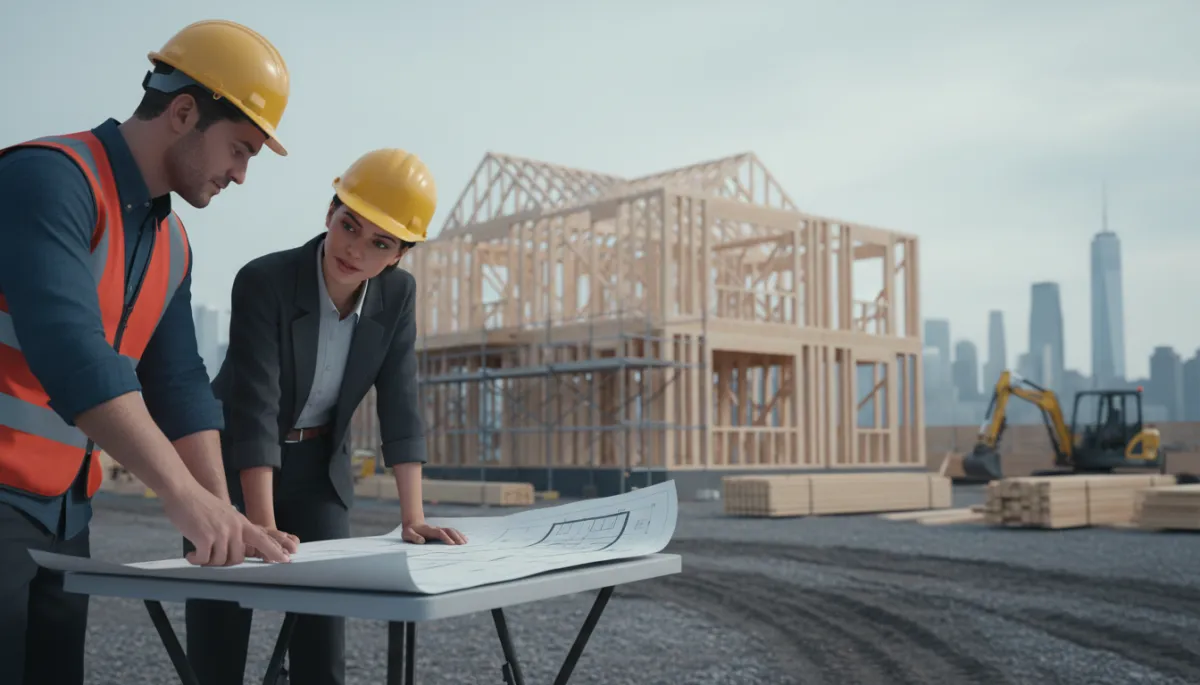
Clear budgets and detailed plans are the foundation of a successful custom build.
Beyond the Build, Soft Costs, Land, and Contingencies
Construction is only part of the full picture. Architectural design, engineering, permitting, and inspections—often called soft costs—can add 20–30% or more on top of your base construction figure, especially in highly regulated areas like New York City. Land costs are separate again and can range from hundreds of thousands to several million dollars in prime locations, depending on size, zoning, and access to utilities.
A dependable builder will also encourage you to include a contingency, often 10–15% of the total budget, to cover unforeseen site conditions, design changes, or material price shifts. This disciplined approach supports both financial control and long‑term customer satisfaction, while still allowing room for thoughtful upgrades during construction.
Why Quality Craftsmanship Matters to Your Final Cost
It can be tempting to focus only on the lowest price per square foot, but quality craftsmanship has a direct impact on long‑term value. Precise framing, careful moisture management, and well‑executed mechanical systems reduce maintenance issues, improve energy performance, and protect your investment for decades. A builder committed to craftsmanship will specify durable materials, proven construction details, and reputable trade partners rather than cutting corners to win a bid.
In practice, this may mean your upfront cost is slightly higher, but you gain a home that feels solid, functions efficiently, and stands up to New York’s climate. That level of construction quality is often the difference between a home that simply looks good on day one and one that continues to perform year after year, supporting genuine customer satisfaction long after move‑in day.
The Value of Local Service and a Transparent Process
Building in New York means navigating local codes, weather, and permitting requirements. Choosing a builder with strong local service experience helps you avoid delays and surprise costs. A locally focused team understands municipal review timelines, utility coordination, and neighborhood expectations, and can guide you through each step with clear communication and realistic schedules.
Equally important is a transparent budgeting process. Look for detailed line‑item estimates, regular cost updates, and open discussions about allowances and potential upgrades. This level of clarity builds trust, keeps your project aligned with your financial goals, and reinforces a dependable, customer‑first experience from initial concept through final walkthrough.
Next Steps, Planning Your New York Custom Home Budget
Every custom home is unique, but you can start narrowing your budget by clarifying three essentials, location, square footage, and finish level. Once you know whether you are building upstate, in the suburbs, or closer to New York City, and whether your vision is mid‑range or fully custom luxury, a reputable builder can translate those decisions into a tailored cost range and schedule.
If you are ready to explore what a thoughtfully built, custom home could cost for your specific site and wish list, consider speaking with a team that combines construction expertise, quality craftsmanship, and responsive local service. Learn more about new construction options and next steps at Infinity Custom Building’s New Construction services and begin planning a home that fits both your budget and your long‑term vision.
